
Where should a porta potty go on a job site?
Start with ground that is level and firm. ADA Standards section 302.1 calls for stable, firm, slip-resistant surfaces, and that rule of thumb matters even outside accessible units because a unit set on soft dirt will tip or sink. Keep clear routes at least 36 inches wide per ADA Standards section 403.5.1 if anyone using a wheelchair needs to reach the unit, and remember ADA Standards section 213.2 requires at least one accessible unit, and 5 percent of a cluster, wherever standard units are grouped. On a construction site, OSHA 1926.51(c)(1) sets the ratio, one toilet for 20 workers or fewer, so placement has to serve that count without forcing long walks across the site. If you are running temporary fencing around the perimeter, plan the toilet zone inside the fence line, not outside it, so crews are not crossing a barrier every trip.
How far from a building or property line should a unit sit?
Most placement issues come down to access, not distance. A unit needs room for the service truck to pull up, hook the vacuum line, and pull away, and that means keeping it off tight walkways or under low branches. OSHA 1926.56(a) sets lighting expectations for work areas at night, so if a unit sits in a dark corner of a Lynwood site, plan for a light tower nearby. Keep the unit away from electrical panels and any temporary power drops covered under OSHA 1926.404(b)(1)(ii), since GFCI-protected circuits and wet service areas do not mix well when tanks get pumped. If the placement sits near a public sidewalk or the street, check with the city first. Dumpster placement permit rules and cost vary by property and by right-of-way use, and that is one detail we always tell customers to confirm directly with Lynwood before delivery day, since we could not verify a specific fee or ordinance for this page.
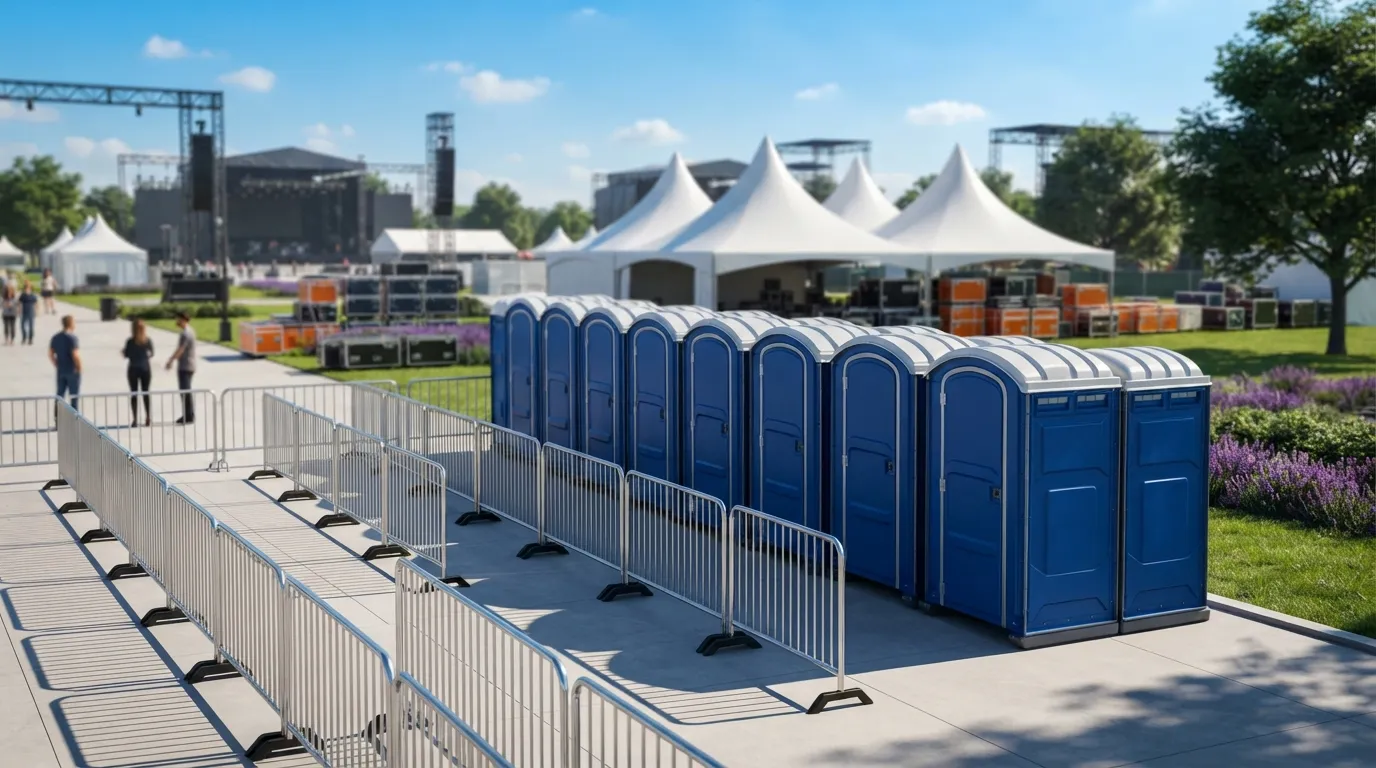
Can a porta potty go in the public right of way?
Placement in a public right of way needs confirming with the city before delivery. We have not verified a specific Lynwood ordinance number or permit fee for curb or sidewalk placement, so do not assume it is allowed without checking. This applies just as much to roll-off dumpsters as it does to toilets. A dumpster placement permit, where required, usually depends on whether the container sits on private property or spills onto a public strip. If your event or renovation site borders the street, plan for the unit to sit fully on private ground unless the city confirms otherwise. This is true whether you are in Lynwood, East Rancho Dominguez 2.6 miles south, or Bell 6.4 miles north.
What clearance does a service truck need to reach the unit?
A roll-off truck needs roughly 60 feet of straight clearance behind it to back in and lift a container, and portable toilet service trucks need a similar straight shot to position the vacuum hose. That is the single biggest placement mistake we see: a unit set behind a fence, a parked car, or a tight alley with no truck path. If you are also renting a storage container or a mobile office trailer, give each its own access lane, since a mobile office trailer with replacement doors installed after storm damage still needs the same clearance as a new one. For events, keep the access lane clear the whole rental period, not just delivery day, because service happens on a set interval under ANSI/PSAI Z4.3, which sets a weekly baseline for units serving 10 people over a 40 hour week. Heavier-use sites need tighter service intervals and that changes the access planning too.
| unit | day | week | month |
|---|---|---|---|
| standard | 100 to 350 | 130 to 500 | 125 to 325 |
| ada | 200 to 400 | 120 to 240 | not offered |
| deluxe | 85 to 1200 | 150 to 290 | not offered |
Placement also affects which unit fits. A deluxe flushable unit or an ADA accessible unit needs the same 60 inch turning space called for in ADA Standards section 304.3.1, so tight side yards or narrow gaps between buildings often rule those out even when a standard unit fits fine. If you are unsure how many units a Lynwood site needs before you start measuring placement spots, our placement calculator guide walks through the math first.
How many accessible units does a jobsite need?
At least one, always, and 5 percent of any cluster of units under ADA Standards section 213.2. A single-unit job in Lynwood still needs that one unit to meet accessible standards if the public or workers with disabilities will use it. Check ADA restroom requirements before you finalize the layout.
Do handwashing stations need separate placement rules?
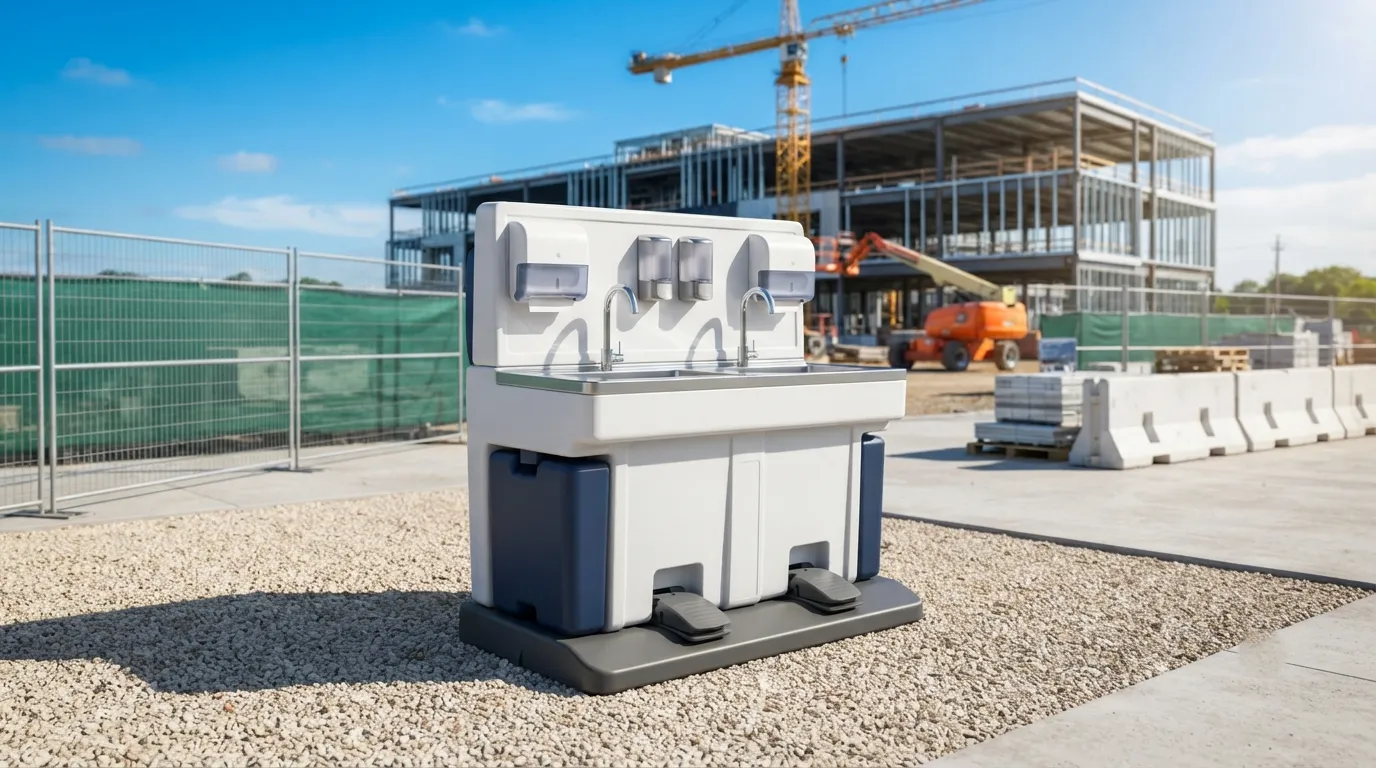
Yes, keep them near the toilets but not blocking the door swing. 29 CFR 1910.141(d)(2) requires soap and towels, not just sanitizer, and stations using replacement parts, including Ozark River portable sink replacement parts, still need that same access clearance as the toilet units themselves.
Can I place a porta potty on a septic field?
Avoid it. Heavy units and service trucks can damage a septic field, and if your Lynwood property runs a septic system that needs pumping, a septic pumping service visit needs the same truck access as a toilet delivery. This applies whether you are near Lynwood or scheduling a Placerville septic pumping service call elsewhere in the region.
Does dumpster placement need a different permit than a porta potty?
Often, yes. Dumpster placement permit requirements depend on whether the container sits in a driveway, yard, or street-adjacent spot, and we recommend confirming with Lynwood directly since permit fees were not verified for this page. See dumpster permit requirements for more detail.
How much space does a standard unit need on the ground?
About 44 by 48 inches, standing roughly 92 inches tall, so give it a clear footprint plus room for the door to swing open without hitting a fence or wall. Check standard porta potty rental specs before finalizing a tight placement.
Next step
Get a delivery date
Tell us the address, the dates and the headcount. We size the order and confirm the route.