
How Many Porta Potties Does OSHA Require on a Jobsite?
OSHA 1926.51(c) lays out a table, not a guess. Crews of 20 workers or fewer need 1 toilet facility. Once you cross 20 workers, the rule shifts to 1 toilet seat and 1 urinal per 40 workers, and at 200 or more workers it drops to 1 seat and 1 urinal per 50. A 15 person framing crew in Lynwood needs just one standard porta potty rental sitting on site. A 90 person general contractor job crosses into the 40 person bracket and needs three units minimum, maybe more once you factor in second shifts or a spread-out site. Multi-trade jobs with painters or crews using coatings also trigger separate washing facilities under OSHA 1926.51(f)(1), which covers exposure to paints, coatings, herbicides or insecticides. That is not the same as a general handwashing rule, so do not treat it as one. For a full breakdown by crew size, the OSHA Portable Toilet Requirements page walks through every bracket, and construction site services covers what else a jobsite typically needs alongside toilets.
How Many Porta Potties Do I Need for an Event?
| Guest count | Event length | Units needed |
|---|---|---|
| 50 | 4 hours | 1 to 2 |
| 100 | 4 hours | 2 to 3 |
| 250 | 4 hours | 4 to 6 |
| 500 | 4 hours | 7 to 10 |
These numbers assume no alcohol service and a single day. Add one unit for every 100 guests if beer or wine is on the menu, since drinking pushes bathroom trips up fast. A wedding with an open bar in Lynwood should budget on the high end of its bracket. Multi-day festivals need units serviced daily rather than left for a weekend, since ANSI/PSAI Z4.3 sets the baseline service interval at once a week for up to 10 users over a 40 hour week, and event crowds blow past that fast. For weddings specifically, check wedding restroom rental, and for larger gatherings see festival restroom rental or county fair restrooms.
What Is a Worked Example for a Construction Site?
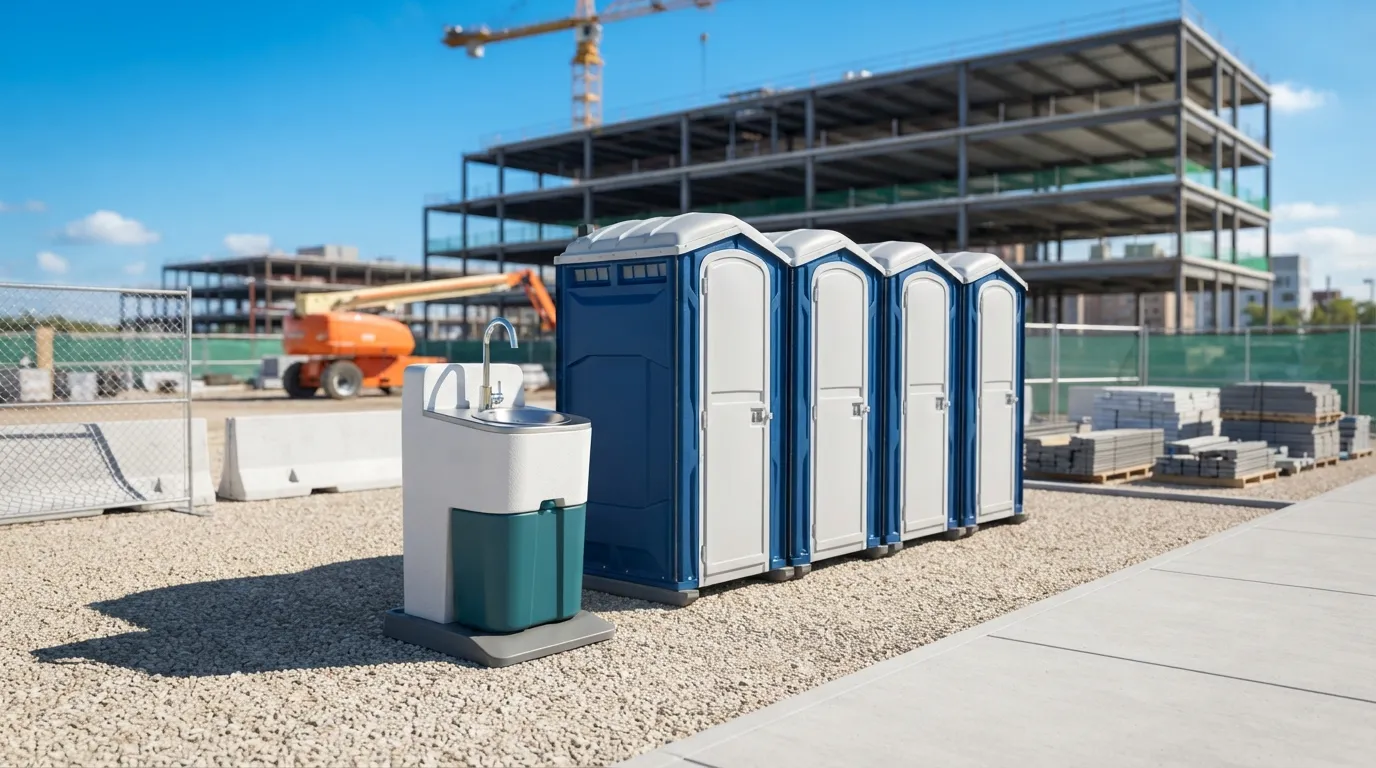
Say you have a 35 person crew building a duplex in Lynwood, working one 10 hour shift a day, five days a week. Under OSHA 1926.51(c), 35 workers sits in the 20-to-40 person bracket, which calls for 1 toilet seat and 1 urinal per 40 workers. That means one combination unit covers the crew, though most contractors add a second standard porta potty rental once the site spreads across multiple buildings or floors. If the crew is doing any painting or applying insecticide treatments, OSHA 1926.51(f)(1) kicks in and you need a washing station nearby too. A handwashing station rental or portable sink rental handles that, and soap plus a towel or hand-drying device is required under 29 CFR 1910.141(d)(2). Hand sanitizer alone does not meet that standard. Site services like temporary power pole or a light tower rental often get bundled with the same delivery.
What Is a Worked Example for a Backyard Wedding?
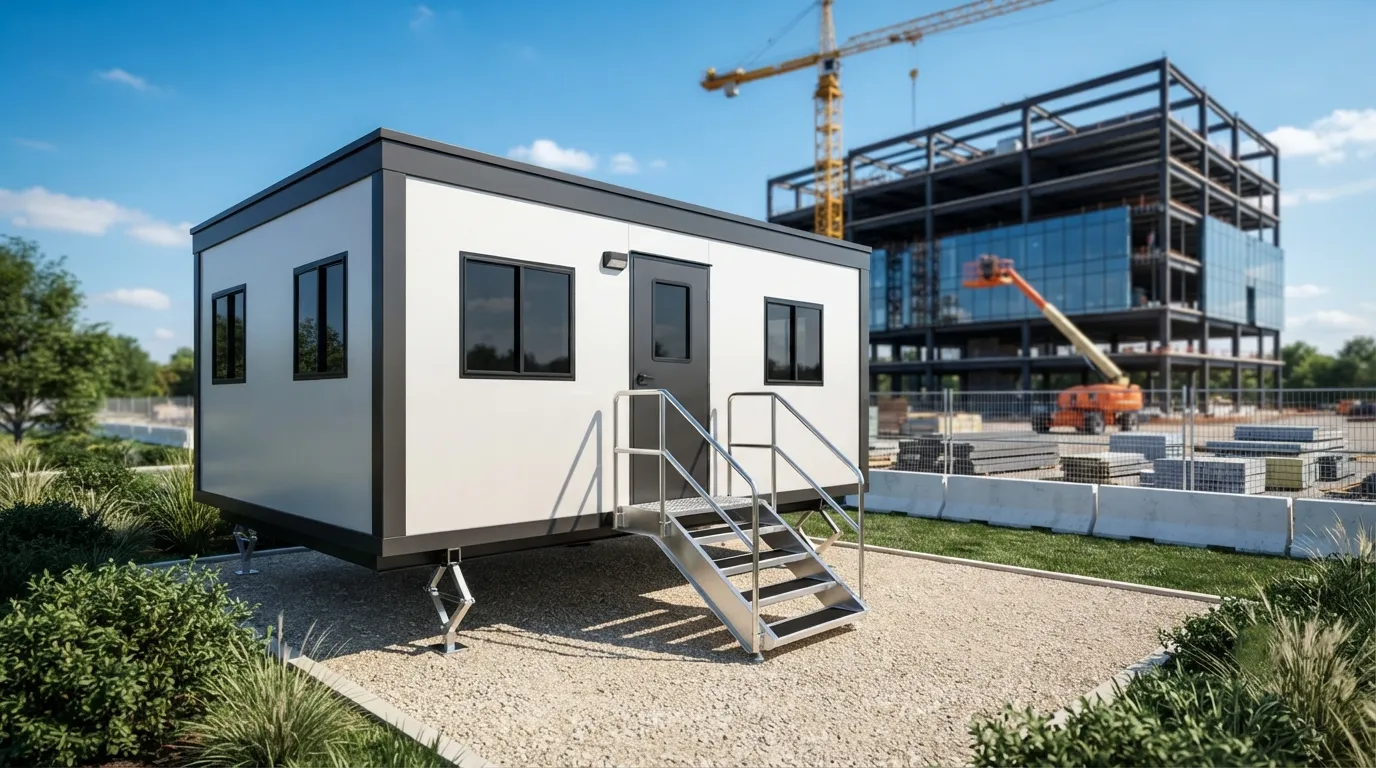
A 150 guest wedding running 6 hours with a full bar falls into the 100-to-250 range, so plan on 3 to 4 standard units plus one accessible unit under ADA Standards 213.2, which requires at least 5 percent of clustered single-user units to be accessible, never fewer than one. That means even a modest wedding needs an ADA accessible porta potty alongside the standard count. Many couples upgrade to a deluxe flushable porta potty or a small restroom trailer rental for guest comfort, especially a 2 stall restroom trailer for a backyard setup. If the reception runs past dark, pair the units with a light tower rental so the path stays visible. Check restroom trailer rental cost before booking if budget is a concern, since trailers price differently than standard units.
How Do Roll-Off Dumpster Sizes Compare?
Bathroom counts are not the only headcount math on a job site. Dumpster sizing follows its own logic, and the numbers get asked about constantly.
| Dumpster size | Length | Cubic feet | Typical capacity |
|---|---|---|---|
| 10 yard | about 14 feet | roughly 270 cubic feet (how many cubic feet in a 10 yard dumpster) | lighter cleanout loads |
| 20 yard | about 20 feet (how many feet is a 20 yard dumpster) | roughly 540 cubic feet (how many cubic feet in a 20 yard dumpster) | mixed construction debris |
| 30 yard | about 20 feet | roughly 810 cubic feet | larger remodels, roofing |
| 40 yard | about 22 feet | roughly 1,080 cubic feet | major construction, commercial |
Weight capacity depends heavily on what is going in the bin. A 20 yard dumpster is about 20 feet long and generally handles a few tons of mixed debris before hitting weight limits, and a 30 yard unit can carry more tons depending on the load, though dense material like concrete or shingles fills the weight limit long before it fills the box. A 40 yard dumpster holds the most volume and the most tons of the four, though the exact ceiling still varies by hauler and by what is inside. Check dumpster weight limits before loading anything heavy, and see dumpster sizes and dimensions for the full spec sheet. Roll-off trucks need about 60 feet of straight clearance behind them to place the bin, so measure your driveway or street frontage in Lynwood before delivery day. Pick a size on 10 yard dumpster rental, 20 yard dumpster rental, 30 yard dumpster rental, or 40 yard dumpster rental, and confirm placement rules on dumpster permit requirements since public right-of-way placement needs confirming with the city.
Should I Rent by the Day, Week, or Month?
Short jobs cost less per day but more per unit-day than long ones, so match your rental length to your actual timeline instead of guessing high. A standard unit runs 100 to 350 dollars a day depending on the market, while a full week lands between 130 and 500 dollars, and a month runs 125 to 325 dollars, which is often cheaper per day than a short rental once you spread the cost out. Weekend events for a standard unit typically run 125 to 400 dollars flat.
| Unit | Day | Week | Month |
|---|---|---|---|
| Standard | 100-350 | 130-500 | 125-325 |
| ADA | 200-400 | 120-240 | - |
| Deluxe | 85-1200 | 150-290 | - |
Delivery fees add 100 to 500 dollars for a single day, dropping to 50 to 150 dollars if billed weekly, or 120 to 420 dollars across a month. See porta potty rental per day and monthly porta potty rental for a longer breakdown, or start with porta potty rental cost for the full picture.
Where Do I Place Units on a Tight Lot?
Placement matters as much as headcount. ADA Standards 403.5.1 requires a clear route at least 36 inches wide leading to any accessible unit, and the unit door itself needs a 32 inch clear opening under ADA Standards 404.2.3. Inside, a 60 inch turning circle is required under ADA Standards 304.3.1, and the ground under the unit has to be stable, firm and slip resistant per ADA Standards 302.1. On a narrow Lynwood lot, that often means placing units near the curb rather than tucked behind a fence line. Placement in the public right-of-way needs confirming with the city before delivery, since rules vary by block and by permit. The porta potty placement guide covers ground conditions and clearance in more detail, and porta potty permit requirements covers what to check with the city before the truck arrives. Renters near East Rancho Dominguez, 2.6 miles south of Lynwood, run into similar curb and sidewalk questions.
How many porta potties do I need for 100 guests?
Plan on 2 to 3 standard units for 100 guests over a 4 hour event, more if alcohol is served. A 6 to 8 hour event pushes that toward 3 to 4 units. Add one ADA-accessible unit under ADA Standards 213.2 regardless of headcount, since at least one accessible unit is required whenever units are clustered.
How many porta potties do I need for 20 workers?
Exactly 20 workers falls at the top edge of the OSHA 1926.51(c) bracket, so one toilet facility covers the crew. At 21 workers, you move into the next bracket, which calls for 1 seat and 1 urinal per 40 workers, so most contractors round up to two units at that point.
How many tons does a 30 yard dumpster hold?
Capacity depends on material density more than dumpster size. Heavy debris like shingles or concrete hits the weight limit long before the box fills up, while light debris like drywall or cardboard fills the space first. The same logic answers how many tons does a 20 yard dumpster hold and how many tons does a 40 yard dumpster hold: both swing widely with what is inside. Check dumpster weight limits for guidance specific to your load type before booking.
Do I need a separate handwashing station with porta potties?
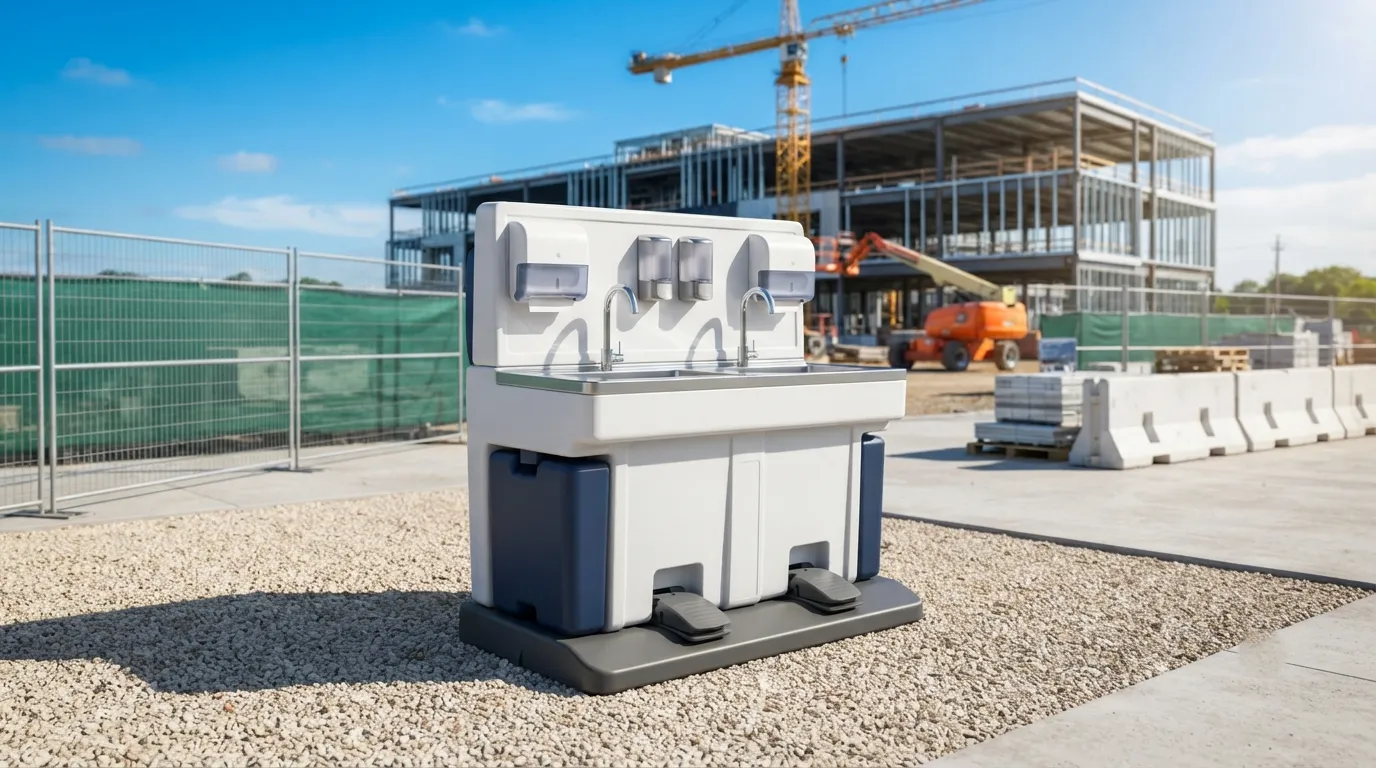
Not always, but jobsites with painting, coating or pesticide work trigger OSHA 1926.51(f)(1), which requires washing facilities for that specific exposure. Standard construction sanitation otherwise falls under 1926.51(c). A handwashing station rental is the simplest way to cover that requirement without guessing.
How far in advance should I book for an event?
Booking two to three weeks ahead gives Lynwood Porta Pros room to confirm unit counts against your final guest list and secure delivery scheduling. Weekend events and holiday weekends fill fastest, so earlier is safer, especially if you need a restroom trailer rental rather than standard units.
What happens if I underestimate my unit count?
Lines form fast once units run short, especially with alcohol service or a hot day. Emergency porta potty rental can add units on short notice, but planning the headcount correctly the first time avoids the scramble and the added delivery fee that comes with a rush order.
Next step
Get a delivery date
Tell us the address, the dates and the headcount. We size the order and confirm the route.