
Do you need a permit for a porta potty in Lynwood?
Most rentals never touch a permit question. If your portable toilet rental sits on a driveway, a backyard, or fenced construction land, you're on private property and the city generally has no say in it. The trouble starts at the curb. Placement in the public right of way, meaning the street, parking lane, or sidewalk in front of a property, is NOT VERIFIED against a specific Lynwood ordinance in our records, so we tell every customer to confirm with the city before locking in a curb placement. This matters more than people expect on tight residential lots near East Rancho Dominguez, 2.6 miles south, where driveways are short and the street is the only open space. Don't guess. A five minute call saves a redelivery fee later. If you're unsure where your unit falls, our porta potty rental in Lynwood page walks through placement basics before you request a quote.
Where can a porta potty legally go on my property?
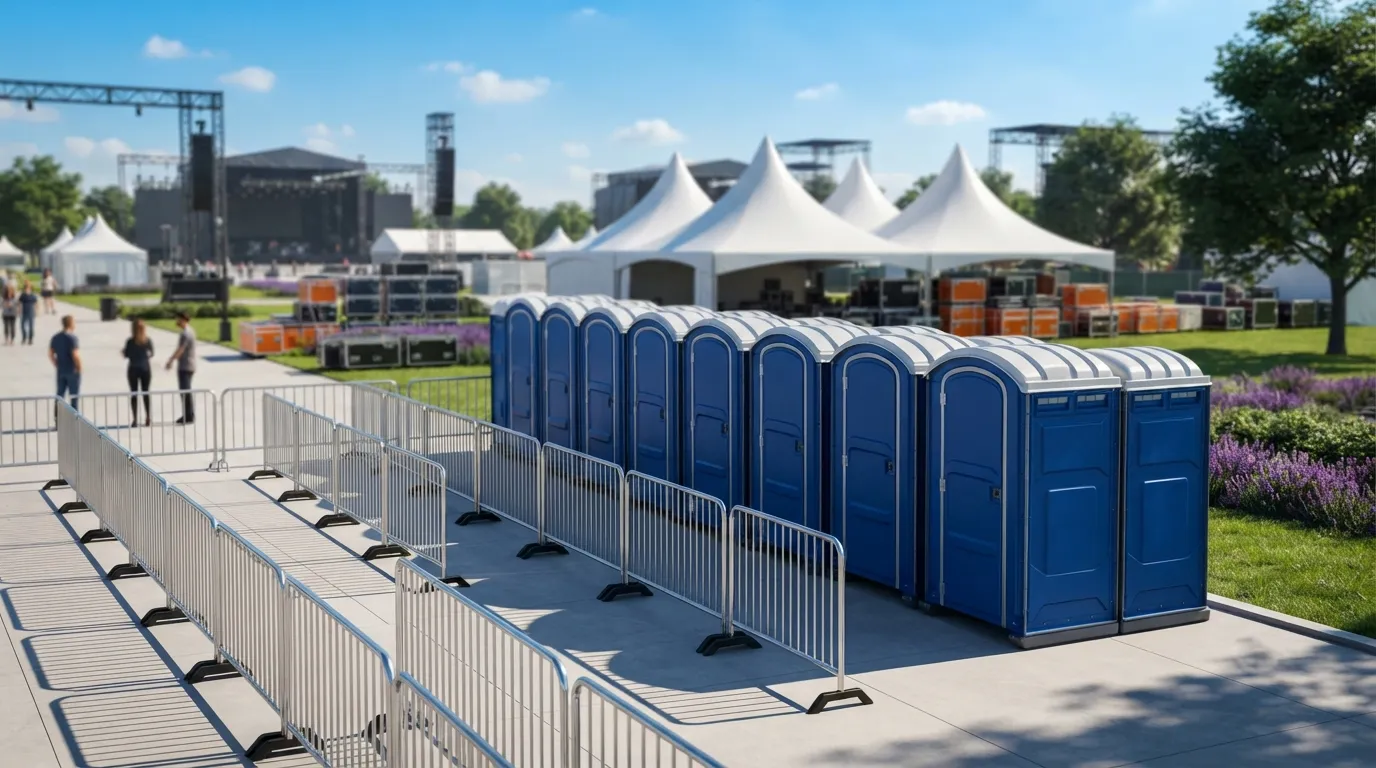
Placement rules exist to keep the unit stable, servable and out of the way, and they matter more than any permit question for most residential jobs. Service trucks need real clearance: a roll-off delivery needs roughly 60 feet of straight clearance behind the truck, and a portable toilet pump-out truck needs a similar approach path free of parked cars or low branches. A standard unit runs about 44 by 48 inches on the ground and stands about 92 inches tall, so it fits most side yards without trouble. If you're required to provide an accessible unit, ADA Standards section 403.5.1 calls for a 36 inch clear route to reach it, and section 405.2 caps any ramp at a 1:12 slope. Firm, level ground matters too. ADA Standards section 302.1 requires stable, slip resistant surfaces, which rules out soft grass or loose gravel as a long-term pad. Our porta potty placement guide covers ground prep and clearance in more depth than we can here.
What permits apply to dumpsters and other equipment in Lynwood?
Dumpsters raise the same right-of-way question as porta potties, and the answer is the same: private property is usually clear, street placement needs a call to the city. This is true whether you're asking about a permit for a dumpster on a residential street, a jersey city style dumpster permit, or a construction-grade roll-off dumpster rental parked curbside during a remodel. We have not verified a specific Lynwood permit fee or ordinance number for dumpster placement, so we won't invent one here; check our dumpster permit requirements page for what we do know, and confirm locally before the truck shows up. Temporary power poles carry their own permit question, usually tied to the utility company and local electrical inspection rather than a sanitation ordinance, and that applies whether you're renting a temporary power pole for a construction trailer or running a light tower rental on the same site. Storage containers follow similar logic: a storage container rental parked in a driveway is simple, one left on the street is a different conversation entirely.
Are there OSHA rules for porta potty rules and regulations on jobsites?
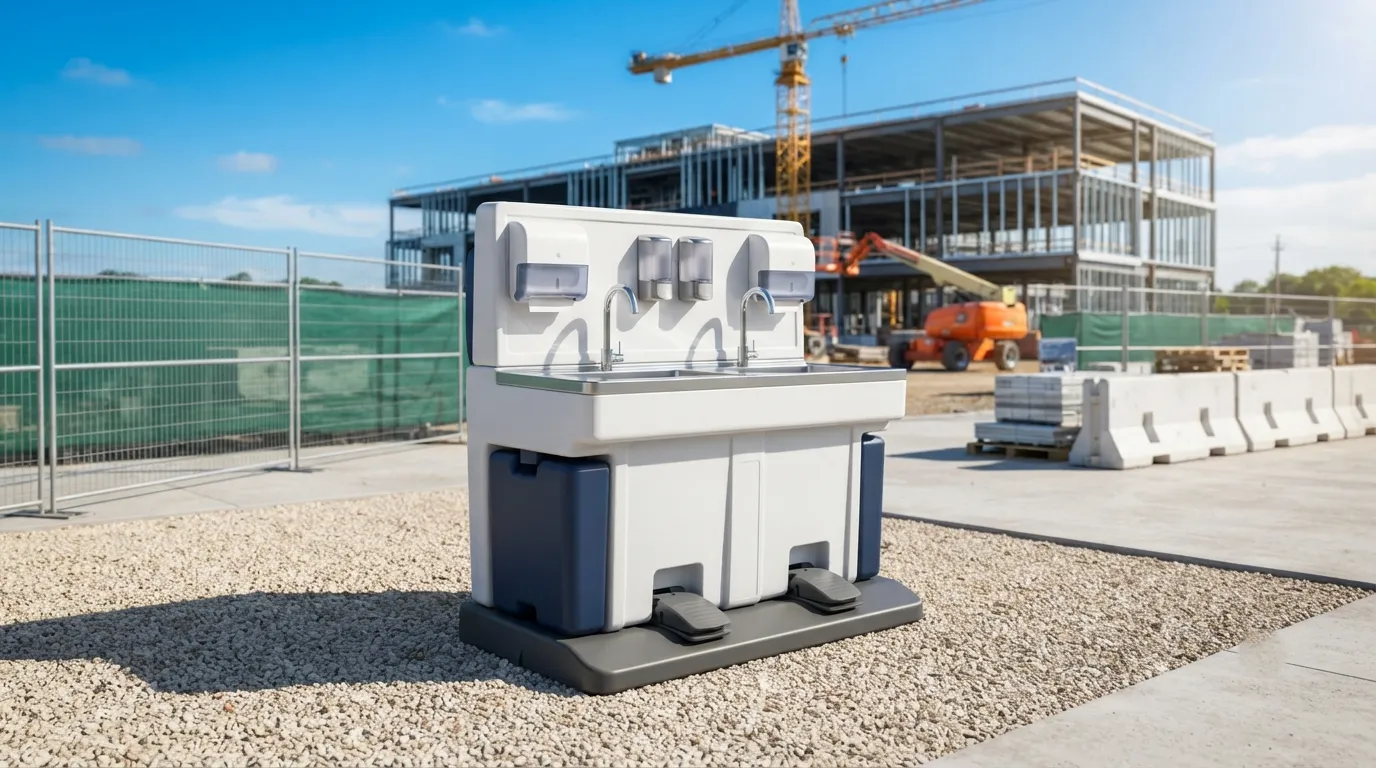
Yes, and they're separate from any city permit. OSHA 1926.51(c)(1) sets toilet counts for construction sites: one facility for 20 workers or fewer, then one toilet seat and one urinal per 40 workers as the crew grows past that, dropping to one per 50 workers at 200 or more. That standard drives most of what we recommend on our construction site services page and on how many porta potties do I need. If your crew is applying paints, coatings, herbicides or insecticides, OSHA 1926.51(f)(1) requires washing facilities for that specific work, which is why a handwashing station rental or portable sink rental often rides along with the toilets on a paint crew's job. None of this is a Lynwood-specific rule, it's federal, and it applies the same way whether your site sits in Lynwood or up in Bell, 6.4 miles north. Full detail lives on our OSHA portable toilet requirements page.
| unit | duration | typical price |
|---|---|---|
| standard | day | $150 |
| standard | week | $200 |
| ada | week | $185 |
| delivery_fee | day | $150 |
Pricing above reflects typical rates across our measured range; see porta potty rental cost or porta potty rental per day for the full spread by duration.
Do I need a permit for a porta potty on private property?
Generally no. Private property, including driveways, backyards and fenced jobsites, typically falls outside city permitting for a single rented unit. The complication is curb and sidewalk placement, which is a right-of-way question, not a private-property one, so confirm directly with Lynwood if any part of the unit touches public space.
Can I place a porta potty on the street in Lynwood?
This needs confirming with the city before you commit to it. We have no verified Lynwood ordinance on file for right-of-way placement, so don't assume it's allowed or blocked. Call ahead, especially for events near Cudahy, 4.3 miles north, where street parking is already tight.
How many porta potties does OSHA require per worker?
OSHA 1926.51(c)(1) sets one toilet for 20 workers or fewer, then scales up per 40 or per 50 workers as crew size grows. It's a federal construction standard, not a Lynwood rule, and it applies to every jobsite regardless of city.
Does a dumpster on my driveway need a permit?
Usually not. Private driveways and fenced lots are typically permit-free for a rented roll-off dumpster rental. Street placement is the exception, and that's the piece that needs a direct call to the city rather than a guess.
Do porta potties need ADA-accessible units on a jobsite?
Where units are clustered, ADA Standards section 213.2 requires at least 5 percent to be accessible, and never fewer than one. That single accessible unit needs a 36 inch clear route and a 60 inch turning circle nearby, per sections 403.5.1 and 304.3.1.
Next step
Get a delivery date
Tell us the address, the dates and the headcount. We size the order and confirm the route.