
How Do Porta Potties Work?
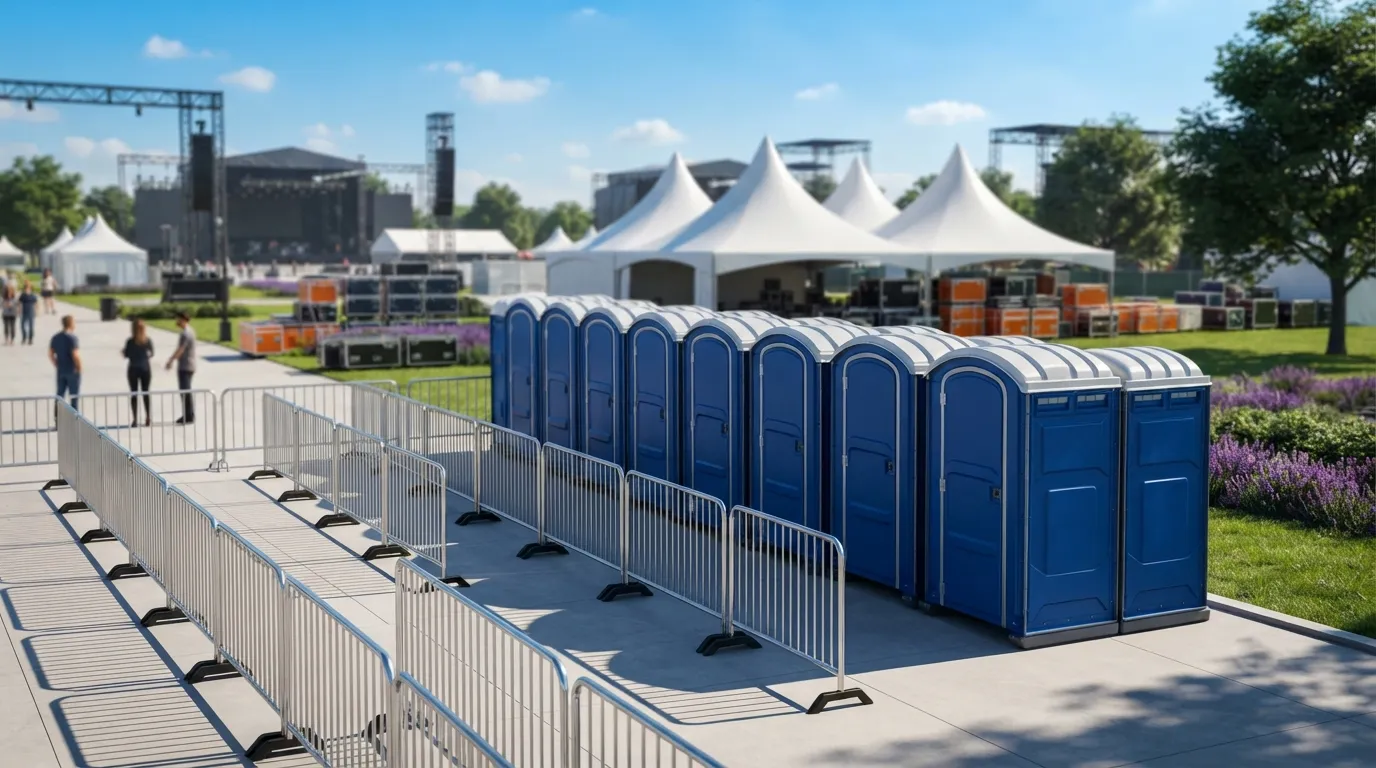
There is no mystery box under the seat. A standard unit is a molded plastic shell, about 44 by 48 inches on the ground and 92 inches tall, sitting over a holding tank. Waste drops straight into that tank. A packet of blue chemical treats the contents, cuts the smell and keeps solids from building up before the next pump-out. Toilet paper goes in a small dispenser mounted to the wall. There is no water tank feeding the bowl on a standard porta potty rental, which is why it does not flush like a bathroom at home. Vents near the roof pull odor up and out rather than back toward the user. On a construction crew in Lynwood, that setup covers a fast trip: a worker steps in, uses the unit, steps out, and the tank quietly does its job until the service truck arrives. Placement matters too. A porta potty placement guide helps crews figure out where units sit relative to work zones, and OSHA 1926.51(c) sets the ratio of toilets to workers on active job sites.
How Does a Portable Sink Work?
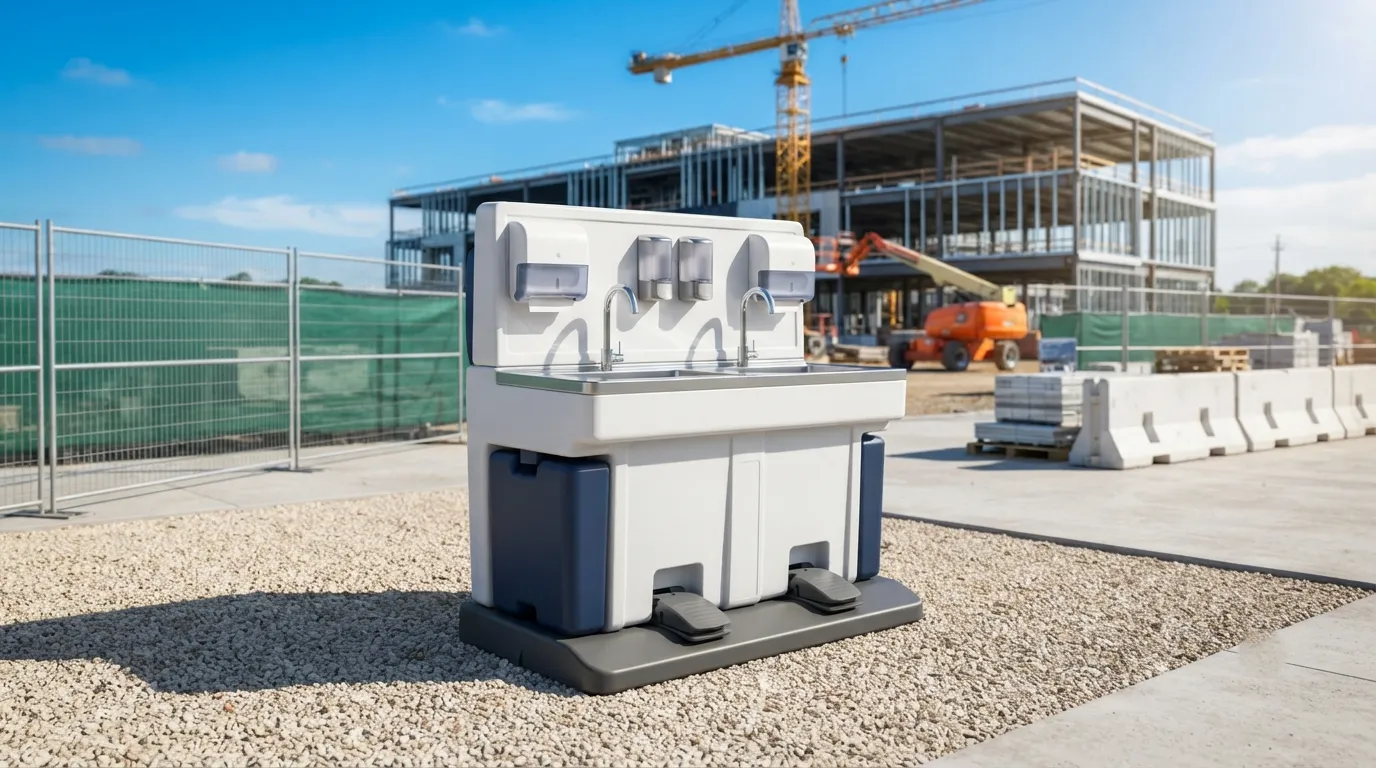
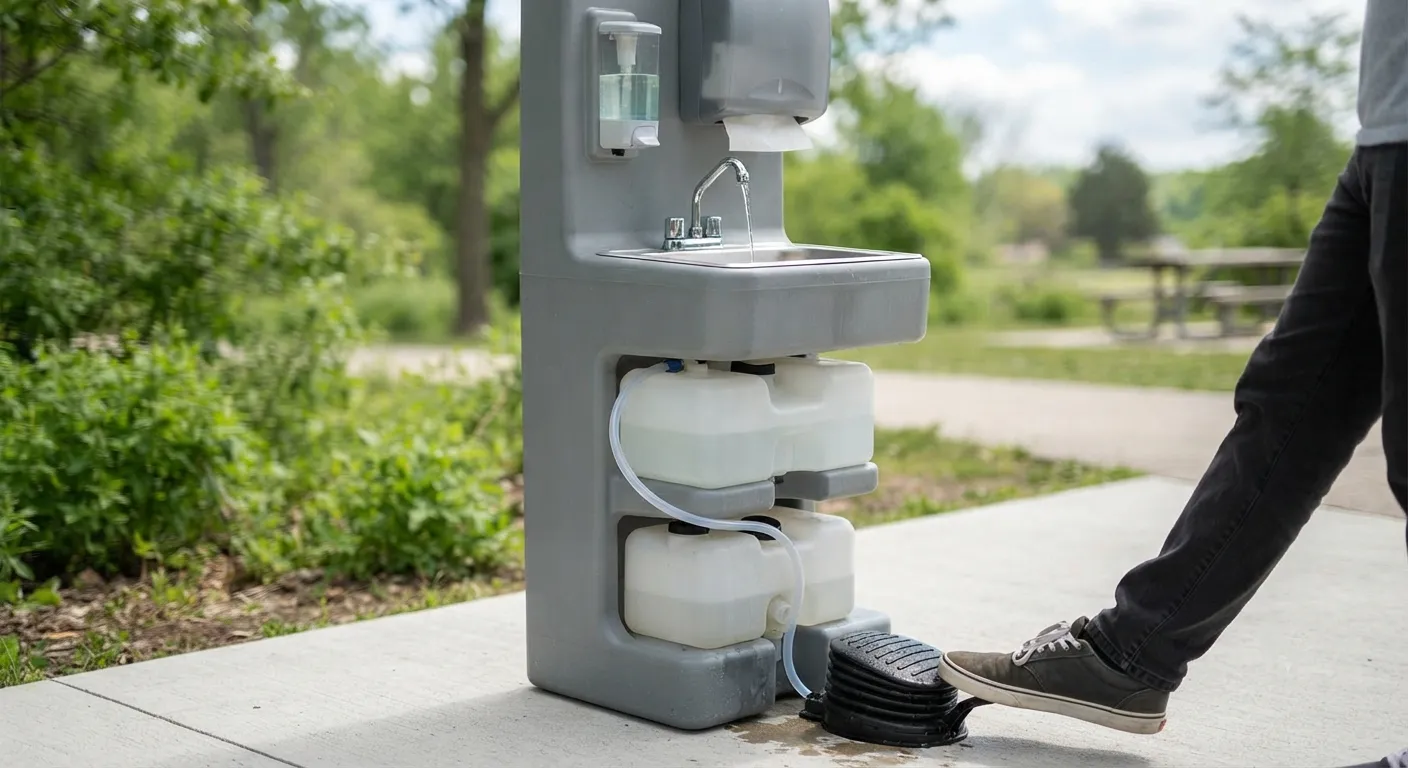
A portable sink rental unit runs on a self-contained fresh water tank, usually foot-pumped or hand-pumped, with a separate gray water tank underneath to catch the runoff. There is no hookup to a building or a hose bib. Fill the fresh tank, and the pump pressurizes just enough water to rinse hands over the basin. Soap dispensers mount to the side. Under 29 CFR 1910.141(d)(2), washing facilities need soap and towels or a hand-drying device, and hand sanitizer alone does not satisfy that. That is why crews pair a handwashing station rental with sanitizer stations rather than relying on sanitizer by itself. Food vendors and farm crews near Lynwood often add a hand sanitizer station rental as backup, but the sink handles the actual wash. For agricultural operations, OSHA 1928.110 requires potable water, toilets and handwashing within a quarter mile walk of hand-labor employees, one facility per 20 workers. A handwashing requirements page breaks down which setup fits which job.
How Do Flushable Porta Potties Work?
A deluxe flushable porta potty adds a fresh water reservoir and a small pump that pushes water into the bowl when you press a flush handle, rinsing waste down into the holding tank below. It feels closer to a home bathroom. Some deluxe units also run a small sink with foot-pump water, so guests can wash up without leaving the unit. These cost more to rent than a standard model, since they carry more moving parts and need more frequent servicing to keep the flush working right. Event planners booking a wedding restroom rental or a festival restroom rental tend to reach for deluxe units or a step up to a restroom trailer rental, which runs multiple stalls off a shared tank system. For accessibility, ADA Standards 213.2 requires that where single-user units are clustered, at least 5 percent, and never fewer than one, must be an accessible unit, which is why larger events near Lynwood pair standard rows with an ADA accessible porta potty.
What Chemicals Go in a Porta Potty?
The blue liquid in a porta potty tank is a deodorizing and waste-breakdown chemical, not a cleaning product for the outside of the unit. It gets added at delivery and topped off during each service visit. ANSI/PSAI Z4.3 sets a baseline service interval of one visit per week for up to 10 users over a 40 hour week, which is why job sites and events need to plan pump-out frequency around headcount, not guesswork. Crews searching "portable toilet chemicals near me" are usually asking who restocks it, and the answer is the rental company, not the renter. Lynwood Porta Pros handles that restock on every scheduled visit. Septic systems use a different category of product entirely. Homeowners sometimes ask about septic tank cleaning chemicals for a 1,000 gallon tank, but a septic tank pumping cost page and a licensed pumper are the safer route, since a residential septic tank is typically pumped every 3 to 5 years based on tank size and household size, not treated with additives as a substitute. A how often septic tank pumping guide covers that schedule, and septic tank warning signs covers what to watch for between pumps.
Frequently Asked Questions
Do porta potties smell?
They can, but a working unit with fresh chemical and a current service schedule should smell only faintly. Odor usually means the tank is overdue for a pump-out or the vent is blocked. See do porta potties smell for what drives it and how service frequency fixes it.
How often are porta potties cleaned?
Standard job site and event rentals typically get serviced weekly, following the ANSI/PSAI Z4.3 baseline of one visit per week for up to 10 users. Higher-traffic events need more frequent visits. Full details are on how often are porta potties cleaned.
Can a porta potty freeze in winter?
Yes, tank contents and any water lines in a deluxe unit can freeze in cold weather, which changes how service crews winterize units. See porta potty in winter for how Lynwood Porta Pros handles cold-weather setups.
How many porta potties does a construction site need?
OSHA 1926.51(c) sets the ratio: one toilet facility for 20 workers or fewer, then one toilet seat and one urinal per 40 workers as headcount climbs past 20. A how many porta potties do i need calculator walks through crew size scenarios.
How much does a standard porta potty rental cost in Lynwood?
Daily rates for a standard unit run from around 100 to 350 dollars depending on term length and delivery. Weekly and monthly rentals bring the per-day cost down. See porta potty rental cost for the full breakdown by duration.
Next step
Get a delivery date
Tell us the address, the dates and the headcount. We size the order and confirm the route.